What size wedding tent for 100 guests?
For 100 guests with a seated dinner, dance floor, buffet and bar, plan on roughly 2,000 square feet of tent: a 30x60 if the layout is tight, a 40x60 if you want breathing room. Dinner seating alone takes about 1,000 to 1,200 square feet (a 30x40). The dance floor, bar, food and band take the rest.
| Guests | Seated dinner only | Full wedding layout |
|---|---|---|
| 50 | about 500 to 600 sq ft (20x30) | about 1,000 sq ft (30x30 to 30x40) |
| 100 | about 1,000 to 1,200 sq ft (30x40) | about 2,000 sq ft (30x60 to 40x60) |
| 150 | about 1,500 to 1,800 sq ft (40x40 or 30x60) | about 3,000 sq ft (40x80) |
| 200 | about 2,000 to 2,400 sq ft (40x60) | about 4,000 sq ft (40x100) |
At 100 guests you're looking at thirteen 60-inch rounds (8 per table) or ten 72-inch rounds (10 per table). Fewer, bigger tables free up floor space. Cocktail hour can happen on the lawn, so don't size the tent for it.
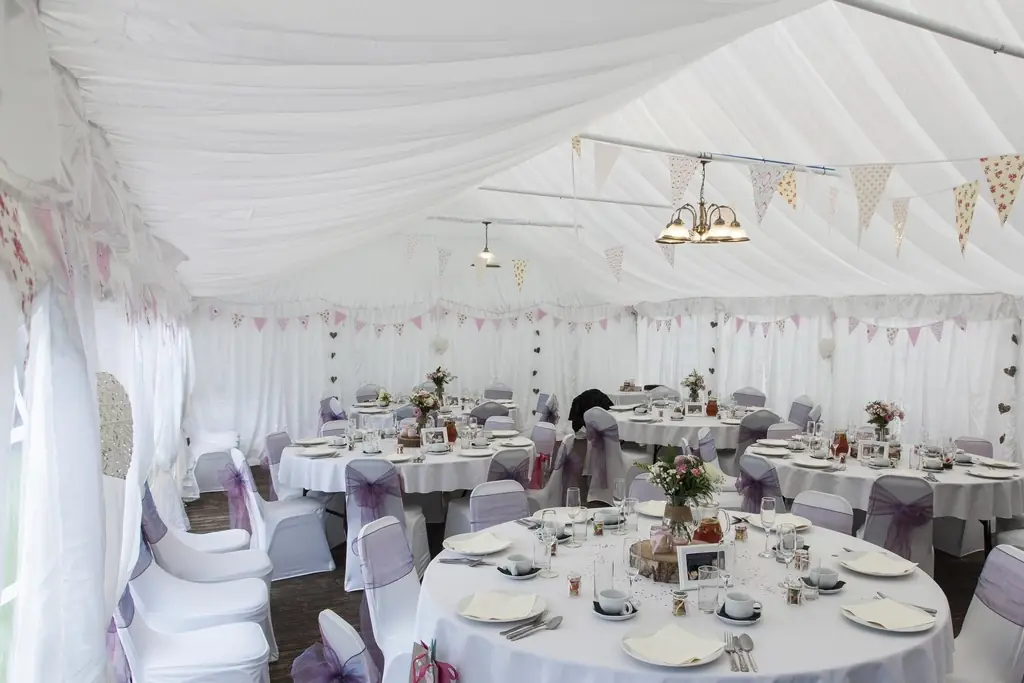
Pole tents vs frame tents for a wedding
Pole tents are the classic wedding look: tall peaks, center poles and ropes staked into the lawn. They usually cost less than a frame tent of the same size, and on an open lawn with room for stakes they give you the most tent for the money. The trade-off is the center poles, which land between tables and have to be planned around, especially near the dance floor.
Frame tents stand on their own frame with no center poles, so the floor plan is wide open. They can go on a patio, a driveway or tight ground next to the house, weighted down where stakes won't work. If the tent has to sit against the house or over pavement, frame is the answer.
Sailcloth and clear-top wedding tents
Sailcloth tents use a translucent fabric on wooden poles, and they glow from the inside after dark. Clear-top tents let guests see the sky, which is lovely at night and can get warm under direct July sun. Both are specialty tents that mostly the bigger Capital Region companies carry, so ask about sailcloth or clear-top availability as early as you can.
Tent sidewalls and lighting for a wedding tent
Order window sidewalls for the look and keep a solid wall or two on hand for the weather side. Clear walls make sense when the view is the point, like a farm field or a lake. Walls that can stay on site rolled up let you decide the morning of the wedding.
Most tent companies offer string lighting, and a few rows of bistro lights across the ceiling do more for a reception than anything else on the order. Ask about chandeliers or uplighting if you want more. Lights, a band and a caterer's warming equipment all need power, so tell us how far the tent sits from the house; a generator may be needed.
Heated tents for fall weddings in the Capital Region
September and October are popular wedding months here, and the nights get cold. Ask about tent heaters, usually propane units that sit outside the tent and blow warm air in, along with sidewalls on all sides to hold the heat. Plan the heat when you book, not the week of the wedding.
Dance floors, tables and other backyard wedding rentals
A wedding tent is the start of the order. Many couples add a dance floor rental under the tent, because dancing on a lawn means uneven footing and heels sinking into grass. Then come table and chair rentals: white folding chairs and round tables are standard, and you can ask about chiavari chairs or farm tables. Put the whole list on one quote so the tent size accounts for everything under it. The backyard wedding checklist covers the rest.
Wedding tent rental in Saratoga Springs, Loudonville and Malta
A backyard wedding on your own property has its own rules. Call 811 before the stakes go in so buried lines get marked, and check with the town about permits. In Saratoga Springs, weddings compete with the track season and SPAC for summer weekends. The big lots in Loudonville and the properties near Saratoga Lake in Malta usually have room for a 40-foot-wide tent. Send your date and guest count through the form, or call (518) 464-8736.